2025.08.22
Prof. Yoshida is briefly featured in the Mainichi Shimbun (in Japanese).
2024.10.02
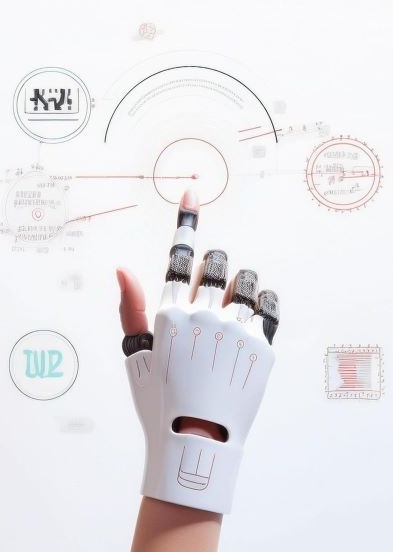
Co-hosted: Japanese Society of Regenerative Medicine and Rehabilitation
Supported by: Saitama University
2024.07.25
Radio Feature "Goodbye Club Advisor!?" — NHK National High School Broadcasting Contest Award of Excellence

A student production from Sakuragaoka High School in Mie Prefecture, titled "Goodbye Club Advisor!?", which Prof. Yoshida helped with Prof. Tanaka, advanced to the finals of the 71st NHK National High School Broadcasting Contest and won an Award of Excellence in the Radio Documentary category.
Background:
For broadcasting club members, the club advisor is an indispensable figure. But the reality is that our advisor is so busy. So, they turned their attention to conversational AI and decided to introduce an AI to act as their advisor. Can an AI truly replace a human advisor? They created this program to reaffirm the importance of the advisor's role.
2023.07.15
2022.07.15
2019.07.10
IEEE World Haptics 2019 — Haptic VR Demonstration
Demonstration of haptic virtual reality using soft actuator at IEEE World Haptics 2019.
Li J., Michishio M., Qu Q. & Yoshida T. (2019) Non-metal air actuator based multimodal force sensation exhibitions by continuously varying force. Demo DM 1.03.
Li J., Michishio M., Qu Q. & Yoshida T. (2019) Non-metal air actuator based multimodal force sensation exhibitions by continuously varying force. Demo DM 1.03.
2018.10.18
Gateway to Science 2nd: "Machine and Human Brain — Beyond AI"
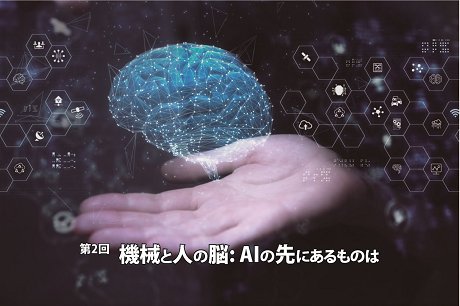

Co-hosted: Tokyo Tech International Frontier Science and Technology Education Program
2018.10.14
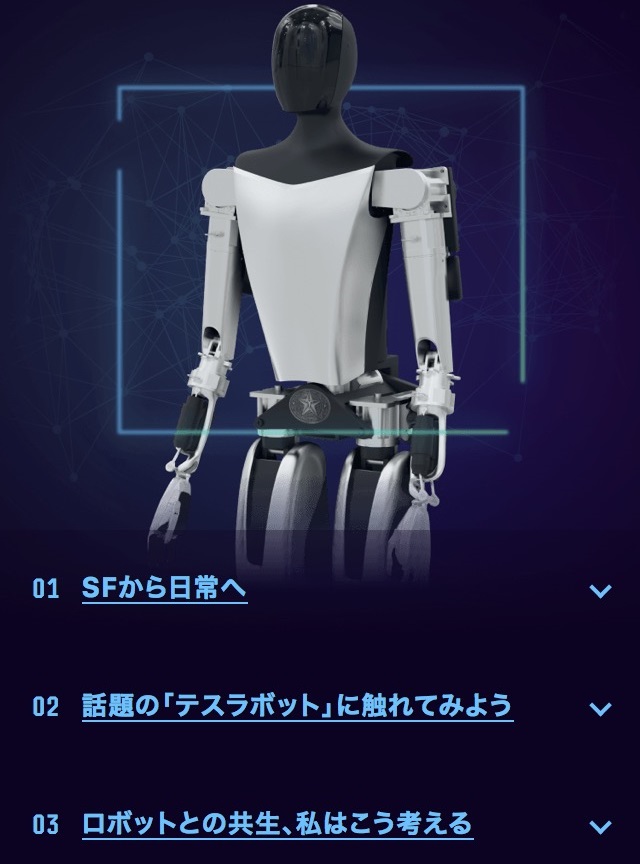
Exploring Future Roles — Should Somebody Be Accountable for Social Accidents Caused by Robots?
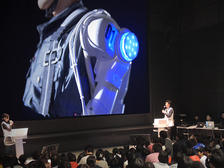
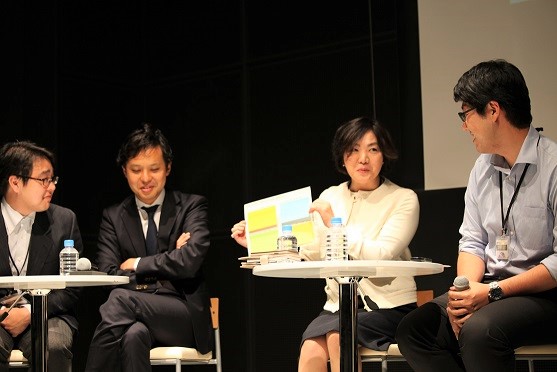
Who should be held responsible when a robot makes an autonomous judgement that leads to a social accident? The manufacturer? The operator? The robot itself? Where are the limits of current law? How can we balance technological development with social safety? Four researchers in engineering, law, psychology and philosophy discussed these issues with visitors.
Event Calendar
Co-hosted: National Museum of Emerging Science, JST RISTEX
2018.07.02
Counseling Center for Robots on Law, Philosophy and Psychology — Open Campus 2018
"Counseling Center for Robots" was held for high school students and university applicants at the Open Campus. Who should be responsible when an AI robot causes an accident? Users? Manufacturers? Or the robot itself? We discussed this issue from multidisciplinary perspectives including law, philosophy and psychology.
Event report
Co-hosted: JST RISTEX
Event report
Co-hosted: JST RISTEX
2018.06.26
Exploring the Harmony of Humans, Robots, and AI
Our lab was featured in the university PR pages: "Advances in robotics and AI have led to an integration of interactions between humans and robots. New challenges regarding safe and comfortable operation and liability in the event of accidents are being addressed from both psychological and mechanical engineering perspectives." The video shows our lab's "wearable power support robot that allows brain measurement while being worn," built with soft actuators.
Faces Researchers Vol. 31 — Takako Yoshida
Faces Researchers Vol. 31 — Takako Yoshida
2018.04.13
Responsibility and Subject for AI Era — RISTEX Symposium
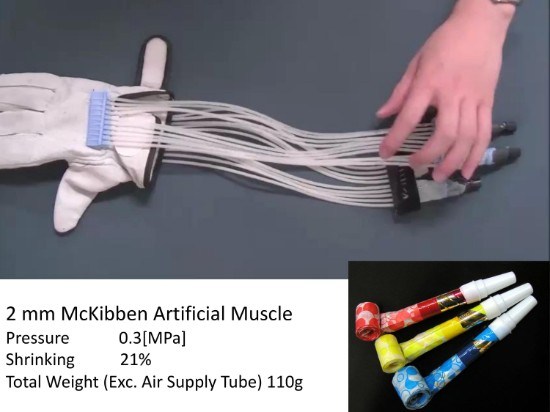
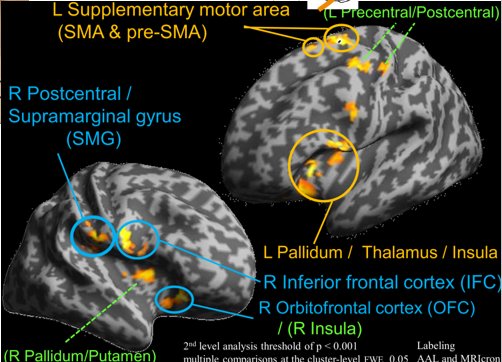
(Provided by: Japan Science and Technology Agency)
"Responsibility and Subject for AI Era"
Part 1: http://logmi.jp/274569
Part 2: https://logmi.jp/274601
2018.04.13
Human Information Technology Ecosystem Booklet Vol.2
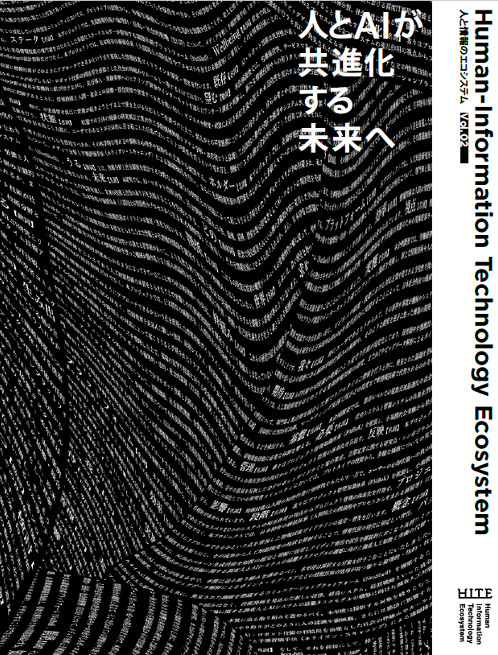
Special Tripartite Discussion: What are the responsibilities and the subject of the artificial intelligence era?
Kazuya Matsuura (Toyo University, Philosophy)
Takako Yoshida (Institute of Science Tokyo, School of Engineering)
Tatsuhiko Inatani (Kyoto University Graduate School of Law)
More information and how to obtain this booklet
2017.04.28
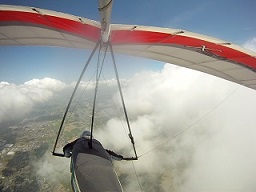
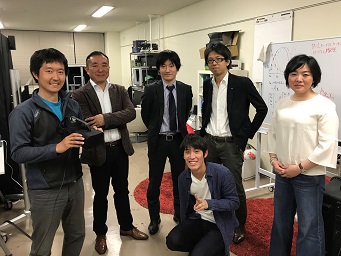
Haneda Kids Week 2017 — Thrilling Flight
http://flyteam.jp/event/detail/4646
Photo: Hang glider national team athlete Yuji Suzuki.
http://suzukiyuji.com/
2017.02.14
Computer Vision, Human Vision, and Your Vision, 2017 Spring
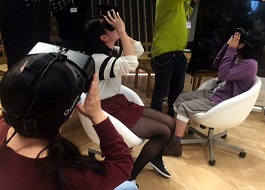
In collaboration with Prof. Masayuki Tanaka, we held a hands-on lecture for junior and senior high school students. Through experiencing 3D virtual reality that combines vision, haptics and proprioception, participants learned how humans and machines perceive the world, and explored a future where these technologies are used in daily life such as sports broadcasting.
http://bit.ly/ttopen2017
2017.02.13
Shota Tanaka Won Best Talk Award — SICE

Master student Shota Tanaka won the best talk award for "An fMRI study to investigate the brain signatures for user's sensation and experience when using wearable robot" from the System Integration Division, SICE. He built a soft wearable power support suit that allows brain measurement, and presented on its safety and the brain function of its wearer.
Featured in: Soft Robotics Pioneered by Thin Artificial Muscles
Featured in: Soft Robotics Pioneered by Thin Artificial Muscles
2017.01.23
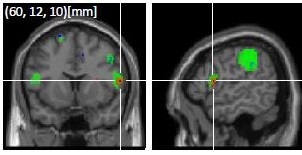
Kazuma Horita Won Best Presentation Award — The Vision Society of Japan
2016.08.11
Vision Science: Open Campus Category 4 Event


2016.08.11
Computer Vision, Human Vision, and Your Vision, 2016 Revisited


JSPS Hirameki-Tokimeki Science Kakenhi grant.
http://bit.ly/ttopen2016
2016.03.31
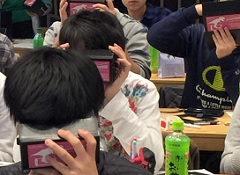
Computer Vision, Human Vision, and Your Vision, 2016
http://www.ok.ctrl.titech.ac.jp/~mtanaka/lecture/tokyotechopen2016/
2015.08.08
Computer Vision, Human Vision, and Your Vision, 2015


2015.08.08
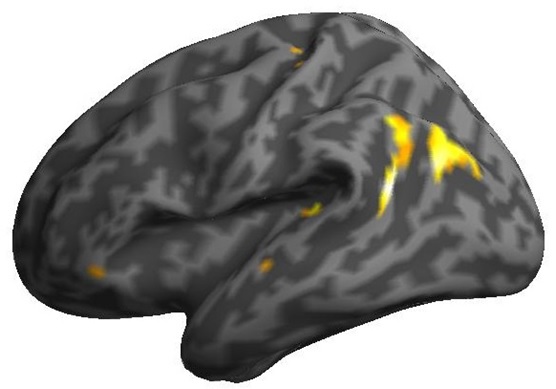
Seeing the Brain with Magnetism: Category 4 Lab Tour, Open Campus
2015.07
Vision Science: Computer Vision, Human Vision, and Your Vision, 2015


Hirameki-Tokimeki Science Kakenhi grant
http://www.ok.ctrl.titech.ac.jp/~mtanaka/lecture/tokyotechopen2015/
DIY recipe to try similar experience at home
2014.08.04
Vision Science: Computer Vision, Human Vision, and Your Vision.
Change Blindness Gallery by High School Students @ Open Campus 08.08.2014
Change Blindness Gallery by High School Students @ Open Campus 08.08.2014
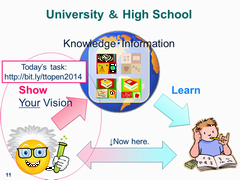
In collaboration with Prof. Masayuki Tanaka, we held a hands-on class. One key difference between university and high school is the dissemination of knowledge to the public. High school students visiting the Open Campus created and published their own Change Blindness movies.
Gallery | Change Blindness generator
Gallery | Change Blindness generator
2013.10.12
Tokyo Tech Open Campus 2013 & Kodai-sai 2013 — Laboratory Training on Human Brain Functions
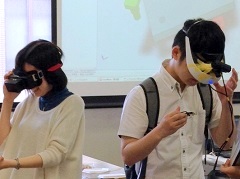
Tokyo Tech Open Campus 2013 & Kodai-sai 2013
2013.04.23
Android Application for Visuomotor Learning
Some functions of the Android app used in our research are available for download and trial.
Video (RollingBall.mov) Music by Shue Itamoto (c) Tokyo Tech Applied Brain Science Lab.
→Download the app and manual (Zip format, Android only)
Yoshida, T., Tsutsumi, Y., Tanaka, M. & Nakamura, A. (2013) Sequential learning of a tablet-based visuomotor task with conflicting rotational transformations, Asiagraph.
Video (RollingBall.mov) Music by Shue Itamoto (c) Tokyo Tech Applied Brain Science Lab.
→Download the app and manual (Zip format, Android only)
Yoshida, T., Tsutsumi, Y., Tanaka, M. & Nakamura, A. (2013) Sequential learning of a tablet-based visuomotor task with conflicting rotational transformations, Asiagraph.
2013.03.08
2013 International Symposium on Design & Emotions
Symposium on design and emotions held in Roppongi, Tokyo. Our international speaker lineup reflects the multidisciplinary profile of design, with experts in industrial design, kansei engineering, information science, semiotics, cognitive science and neuroscience.
2012.10.06
Tokyo Tech Open Campus 2012 & Kodai-sai 2012 — Laboratory Training on Human Brain Functions
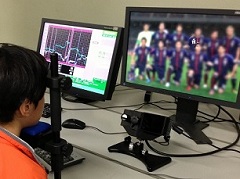
Tokyo Tech Open Campus 2012 & Kodai-sai 2012